Market Insights
What Your Well and Septic System Really Decide When You Buy in Kenwood
August 13, 2026
Market Insights
August 13, 2026
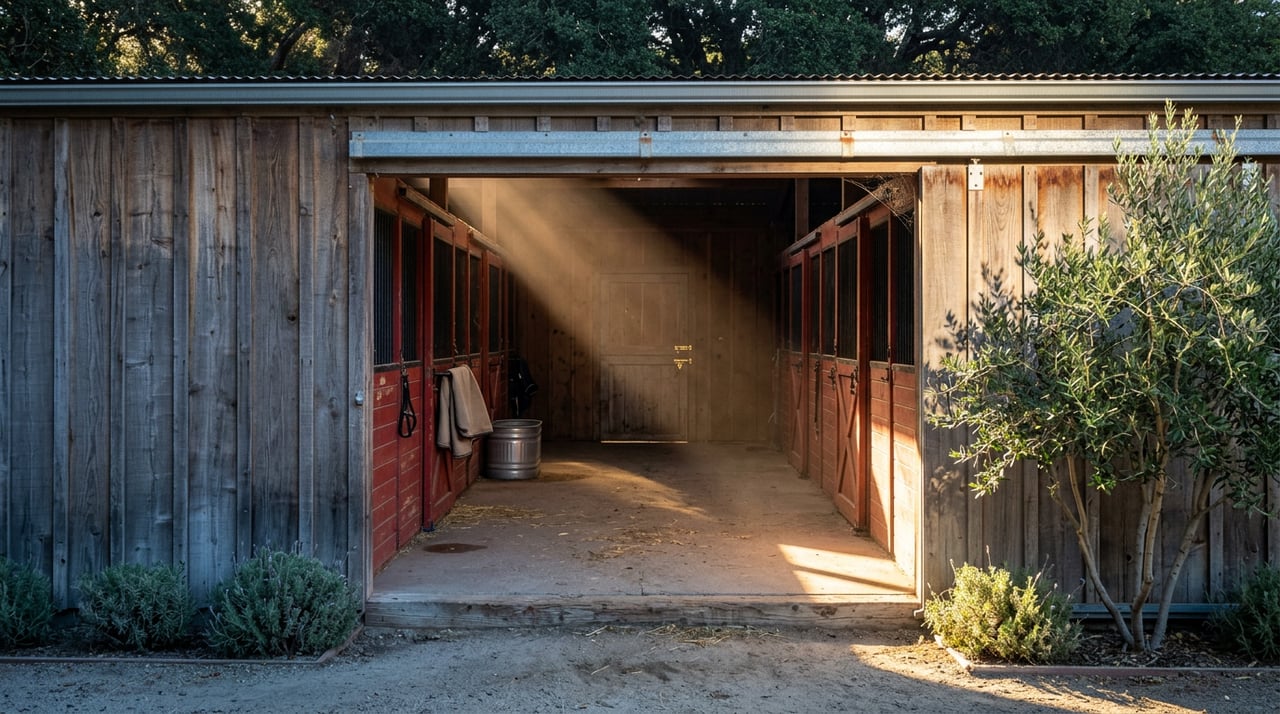
When I built out my own two acres for horses and dogs, the driveway and the barn were never the hard part. The step that took the longest, and mattered most once escrow closed, was the one nobody photographs for a listing: getting the septic system's rated capacity and the well's certified yield squared away before a single foundation went in. Everyone budgets for the barn. Almost no one budgets for the number written on a decades-old septic permit sitting in a Permit Sonoma file.
That number is worth more attention than it gets, especially in Kenwood, where multi-acre parcels and legacy vineyard compounds make it easy to assume that more land automatically means more house.
Two Kenwood parcels currently on the market make the point better than any explanation. One is a shovel-ready 1.4-acre lot with stamped architectural plans, a newly installed septic system rated for five bedrooms, and a brand-new well, infrastructure built out by Earthtone Construction to specs from FIGO Designs. The other is a 2.03-acre gated parcel, larger by half an acre, where the existing well and septic system are sized for three bedrooms.
Acreage says the second lot should support the bigger house. The septic permit says otherwise. In Sonoma County, a septic system's rated bedroom count is a hard ceiling on livable space, not a suggestion. You can own thirty acres and still be capped at whatever your dispersal field and tank were engineered to handle. That ceiling is set by soil conditions, not by ambition, and Sonoma County's own well and septic division has been candid about the challenge: the county has described its soils as notoriously poor for septic systems, which is why expanding an existing system's capacity is rarely a formality.
This is the piece that gets skipped in a walkthrough. A buyer falls for the view from a Kenwood hillside, pictures a six-bedroom compound, and only learns at inspection that the parcel was engineered for four.
Permit Sonoma classifies septic systems on a scale, from code compliant systems that meet every current standard without exception, down through Class I systems that carry a waiver for undeveloped parcels. Each classification comes with its own restrictions on what you can build or add later, and the classification travels with the parcel, not the seller.
Age matters just as much as classification. If a Kenwood remodel touches habitable space and the property's septic system is more than 20 years old, the county's own policy is direct: a Findings Report or Field Clearance becomes required before that remodel can proceed. That single requirement can add real time to a renovation timeline on any of Kenwood's older ranch homes or converted farmhouses, the kind of property that often looks move-in ready but was permitted under a different generation of septic standards.
For anyone weighing an ADU addition, a guest cottage, or converting a barn loft into livable space on a Kenwood property, the septic system's original bedroom rating is the first document worth pulling, not the last.
Septic capacity is one constraint. Well yield is the other, and it comes with its own calendar.
Sonoma County requires a well to demonstrate a sustained yield of at least one gallon per minute per dwelling before it can support new construction in marginal or scarce water zones, a standard the county's dry weather testing rules spell out in detail. What makes this more than an inspection checkbox is timing. The dry weather testing season for well yields typically runs from July 15 to October 1 each year. Shallow wells, those 50 feet or less, cannot have that window extended. Deep wells can sometimes test later, but only until countywide average rainfall reaches a threshold Permit Sonoma tracks through Press Democrat rain gauge data.
A well test scheduled in November on a shallow well isn't a scheduling inconvenience in Kenwood. It's a testing window that has already closed for the year.
For anyone planning to build new or add an ADU on a Kenwood parcel with a shallow well, this means the testing clock effectively runs alongside the region's peak home-shopping season. Miss the window and the next opportunity is roughly nine months out.
| What you're checking | The rule that governs it | Why it matters at closing |
|---|---|---|
| Well yield | Minimum 1 GPM per dwelling, tested July 15 to Oct 1 for shallow wells | A failed or missed test can delay a build-out by a full season |
| Septic bedroom rating | Set at permitting, tied to soil and dispersal field size | Caps livable square footage regardless of lot size |
| Septic system age | Findings Report or Field Clearance required for systems over 20 years on habitable remodels | Adds a documentation step before any qualifying remodel |
| Legacy monitoring status | Only systems with supplemental treatment now require county enrollment | Determines whether ongoing fees and easements still apply |
Sonoma County has narrowed its own Operational Permit and Monitoring program, and the change is worth knowing if you're evaluating a Kenwood property with an older, non-standard septic system. Under the updated OPR policy, the county removed thousands of septic systems from mandatory monitoring altogether. Property owners with those systems no longer submit biannual self-monitoring forms, no longer pay annual fees tied to the program, and Permit Sonoma staff no longer performs the periodic on-site inspections that used to come with it.
Only systems that use supplemental treatment, either built into the design or added as a separate pretreatment unit, still require enrollment in the county's monitoring program going forward.
If a Kenwood property still carries a recorded OPR easement from an older system that has since graduated out of the program, that easement doesn't disappear on its own. Removing it requires a formal quit claim request, and the county's easement release fee was set at $388 for the 2024-2025 fiscal year. It's a manageable cost, but one that surfaces easily in due diligence and rarely appears in a listing description.
For a buyer evaluating a Kenwood property with acreage, a barn, or equestrian ambitions, the practical steps look like this:
For sellers, the order runs in reverse. Pulling septic and well records early, before a listing goes live, means the bedroom rating and yield history are already documented instead of surfacing as a surprise mid-escrow.
Kenwood's price tiers in 2026 reflect this range of infrastructure realities as much as they reflect the wine country premium. Entry-level homes on the valley floor start in the neighborhood of $1.5 million, while foothill equestrian acreage and view estates typically trade between $2.5 million and $6 million, with legacy vineyard compounds commanding more. A parcel's well and septic infrastructure is quietly doing as much work in that pricing as the vineyard views are.
Does more acreage in Kenwood always mean I can build a bigger house? Not necessarily. The septic system's rated bedroom count, set at the time of permitting based on soil and dispersal field capacity, is the actual constraint. A smaller parcel with a newer, larger system can support more house than a bigger parcel with an older, smaller one.
What triggers a Findings Report on an older Kenwood property? Any remodel that touches habitable space on a property where the septic system is more than 20 years old requires either a Findings Report or a Field Clearance from Permit Sonoma before the remodel proceeds.
Can I test a well any time of year in Sonoma County? Generally no. Dry weather well yield testing runs from July 15 to October 1 for shallow wells, without extension. Deep wells may have a later window depending on countywide rainfall totals, but shallow wells do not.
Kenwood rewards buyers and sellers who look past the view and into the permit file. If you're weighing a Kenwood property, whether it's a build-ready lot or a legacy compound with decades of history, I'd welcome the chance to walk through what its infrastructure actually supports before you make a decision that acreage alone can't answer. Callander Country Properties works this ground personally, not just professionally. Let's Connect.
Cherie is dedicated to helping buyers and sellers achieve their goals through personalized service and local expertise. With a focus on luxury and equestrian properties, she creates seamless experiences tailored to every client’s lifestyle. Experience real estate guidance rooted in integrity and care.
Cherie Callander
(707) 292-9540
[email protected]
Cherie Anne Callander | CA DRE# 02234453
W Real Estate | CA DRE# 01795950
539 Broadway Sonoma, CA 95476